Executing great team management can be difficult when your workforce operates across multiple cities. A recent Gallup workforce panel tracker shows that only thirty-one percent of full-time employees feel engaged at work. This leaves a large portion of workers feeling detached during their regular shifts.
You know how hard it is to maintain high performance when your people lack daily motivation. Poor leadership can quickly drain your best corporate assets. This article gives you concrete solutions to transform your leadership style. You will learn how to design fair workplace rules and leverage modern scientific frameworks. Exceptional team management changes your corporate culture and increases overall business output.
Can Better Team Management Skills Really Boost Your Business Sales?
Many business owners look only at profit numbers. They forget to check how their managers actually lead people. A great manager is just as important as the whole team combined. In fact, training your leaders can lift your store sales by twenty-five percent. Good management acts like fuel for your everyday business growth.
You might think that confident people make the best bosses, but this is rarely true. Flashy talkers often fail at running a smooth corporate department. Instead, you need leaders who focus on daily tasks and clear goals. They give quiet support and track progress with simple metrics. Upgrading these skills will bring your company fast financial rewards.
How Does Hybrid Work Impact Workplace Output?
Office life changed forever over the last few years. More than half of office employees now work part of the week from home. About one-quarter of these workers stay home every single day. Only a small group goes to a physical building from Monday through Friday. Modern bosses must learn how to handle these flexible schedules.
Sharing your work week between home and office does not drop performance at all. Even better, this flexible model cuts employee quit rates by thirty-three percent. Keeping your workers happy saves your company thousands of dollars in hiring costs every year.
READ MORE:
- Inspiring Team Motivation: Unlocking the Potential of Your Workforce
- What is Project Management? The 2026 Strategy for High-Performing Teams
What Does Data Show About Remote Productivity?
Government experts look closely at workplace trends to see how they impact the economy. A study from the U.S. Bureau of Labor Statistics shows that working from home actually helps businesses grow. The data reveal a clear positive relationship between total factor productivity and flexible work models. A one percentage-point increase in remote work options correlates with a 0.05 percentage-point rise in total factor productivity growth.
The same government research indicates that remote work lowers unit labor costs significantly. Specifically, a one percentage-point increase in remote work drops unit labor cost growth by 0.1 percentage points. It also drops commercial office building cost growth by 0.4 percentage points. These official findings prove that strategic leadership strategies save substantial operational capital. Companies cut real estate expenses while their human capital operates at peak efficiency levels.
How Can Fair Team Management Habits Stop Workers From Quitting?
Arguments happen when bosses make strict rules without talking to their staff. Team-made choices create the happiest workers. When your employees set their home and office schedules together, ninety percent say the rules feel fair. This inclusive method builds strong trust and keeps your staff focused on their core duties.
Rules made only by top bosses create much lower excitement scores among office workers. Less than half of your staff will support choices that arrive without a group chat. Good management requires listening to your people and making major choices together. Giving workers a real voice stops them from quitting or losing interest in your business goals.
To make this work, start by holding weekly feedback chats with your staff. Let each department vote on their core remote days and meeting times. When you align daily behavior with specific tasks, your people work with maximum energy. This approach removes friction and ensures your business hits every single project target.
What Is the Best Step-by-Step Way to Keep Your Group Aligned?
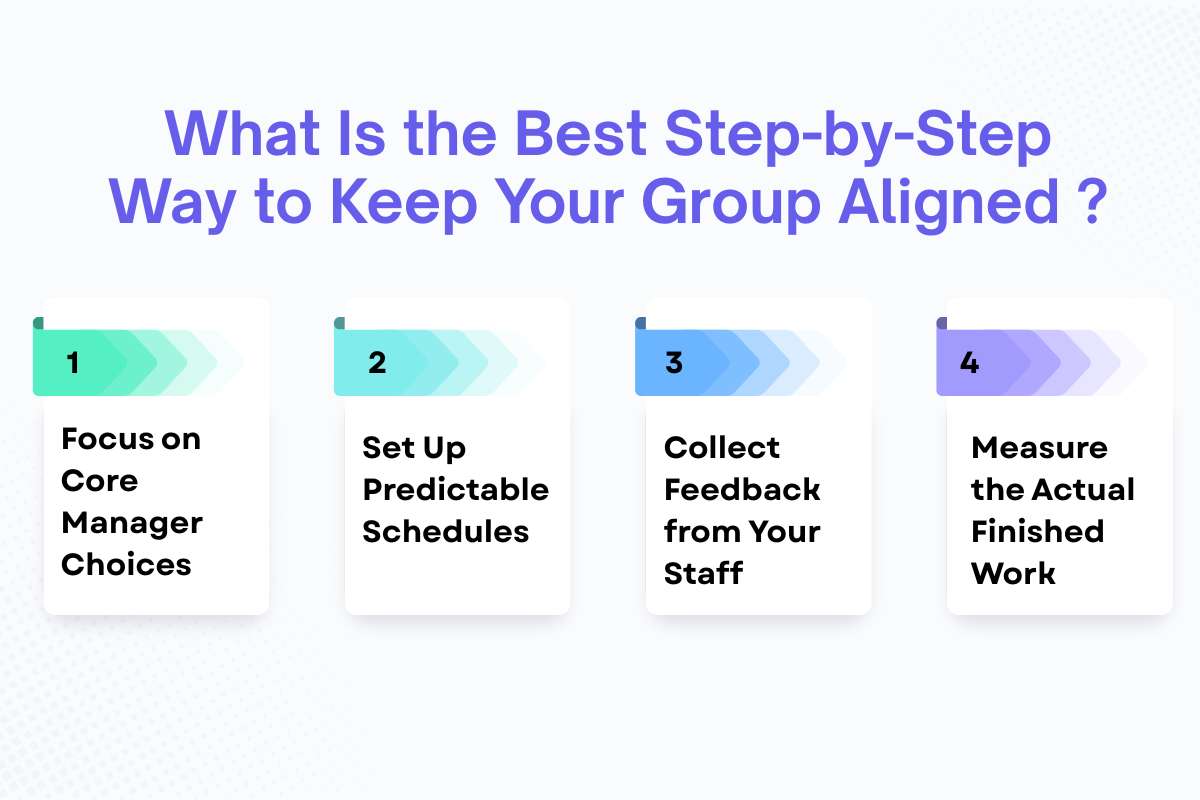
Building a top-performing department requires a clear plan. You can use this simple method to organize your workers without causing stress or exhaustion. Following these steps ensures everyone stays on the same page from day one.
1. Focus on Core Manager Choices: Train your leaders to make smart, data-backed choices instead of relying on a loud personality. Good work habits drive overall group output much better than just acting friendly.
2. Set Up Predictable Schedules: Pick specific days for office meetings and clear times for independent work at home. Standard routines prevent project delays and lower everyday employee worry.
3. Collect Feedback from Your Staff: Let your employees vote on hybrid attendance rules together. Inclusive team management ensures that nine out of ten workers see the workplace setup as completely fair.
4. Measure the Actual Finished Work: Check individual results by looking at real finished tasks instead of watching desk chairs. This practice rewards true effort and keeps your best people at the company.
Conclusion:
Changing your team management plan is the fastest way to grow your business profits this year. Good leadership boosts your sales and stops workers from quitting. Avoid forcing strict rules on your staff from above. Instead, let your employees help make big workplace choices. Use these facts today to build a strong and highly successful company environment.
FAQs
1. How often should leaders host one-on-one chats with employees?
You should meet with each worker for fifteen minutes every single week. These short sessions focus on solving quick problems and keeping goals clear rather than doing big performance reviews.
2. How can managers stop team communication from breaking down across time zones?
Set up a core window of three hours where all workers are online at the same time. Use recorded video updates so people can catch up on news when their shift starts.
3. What is the easiest way to onboard new employees into a remote workforce?
Create a central video library that outlines company processes alongside a clear handbook for new hires. Assign a workplace buddy from the same department to help them navigate their first week comfortably.
4. How do you handle low performance without hurting team morale?
Address the issue privately through objective output metrics instead of using personal criticism. Work together with the employee to create a simple thirty-day improvement plan with clear daily goals.