Many companies treat HR like it’s just for payroll, benefits, and putting out office fires. It’s often seen as a bill to pay rather than a way to grow the business. But that mindset is fading fast.
HR management changes the game. Instead of just hiring people to fill empty desks, you start linking your team’s skills directly to where the company is going.
When you stop looking at employees as a budget line item and start seeing them as your biggest asset, everything changes.
In this article, we will walk you through the steps of strategic HR management to help you shift your approach. We’ll skip the corporate jargon and focus on what actually works for teams. If you want to build a strong, capable team that helps your company hit its goals, keep reading.
The 7 essential steps of strategic HR management
Most teams fail because they lack a clear roadmap. Here is the path to link your team’s daily work with your company’s biggest goals.
1. Define organizational mission and strategy
Before you hire a single person or design a training module, you must answer one question: Where is the business going in the next 3 to 5 years? HR cannot support a strategy it doesn’t understand.
If your leadership team is focused on aggressive market expansion, your HR strategy must pivot toward rapid talent acquisition and onboarding. If the goal is operational efficiency and margin protection, your focus shifts to upskilling and internal mobility.
You are not just managing people; you are managing the human capital required to execute the corporate vision.
2. Conduct a thorough environmental scan

You cannot plan in a vacuum. A robust environmental scan covers both internal capabilities and external market forces. This step is critical because the labor market is becoming increasingly volatile.
- Internal Audit: What is the current skill inventory? Do we have a leadership bench ready to step up, or are we reliant on external hires?
- External Analysis: Are competitors poaching our talent? Is remote work forcing us to adjust our compensation packages to compete globally rather than locally?
Use a SWOT analysis here. Identify your HR department’s Strengths, Weaknesses, Opportunities, and Threats specifically related to workforce supply and demand.
3. Forecast HR requirements and conduct gap analysis
This is where the math happens. You must forecast your future needs based on the data gathered in Step 2. One of the most important steps of strategic HR management is realizing that if your business strategy requires a 20% increase in revenue, it rarely implies a 20% increase in headcount. Often, it requires a 20% increase in productivity or technical capability.
The Gap Analysis Framework:
- Current State: Who do we have today?
- Future State: Who do we need for the 2027/2028 goals?
- The Gap: What is the delta in skills, capacity, and culture?
Companies that ignore this step often find themselves over-hiring for yesterday’s problems while ignoring tomorrow’s technology disruptions.
4. Designing the HR strategy

Now you build the playbook. This is not about choosing between remote and in-office. It is about designing systems that support the business objectives identified in Step 1.
Your strategy should generally encompass four pillars:
- Talent Acquisition: Moving from post-and-pray to predictive, AI-augmented sourcing.
- Training & Development: Building internal academies to bridge the skill gaps identified in Step 3.
- Performance Management: Transitioning from annual reviews to continuous, data-driven feedback loops.
- Compensation & Benefits: Aligning rewards with the specific behaviors that drive your company’s growth.
| Focus Area | Operational HR Approach | Strategic HR Approach |
| Recruitment | Filling open vacancies | Building talent pipelines for future roles |
| Training | Compliance-based modules | Performance-linked skill development |
| Data | Static spreadsheets | Predictive analytics on turnover/retention |
| Culture | Happy hours and perks | Aligned values and clear performance drivers |
5. Implement the strategy with change management
Strategy is useless without execution. This is where most HR leaders fail. They announce a new initiative, a new performance review system, or a DEI program, and then act surprised when the organization pushes back.
To succeed, you must treat your employees as customers. Market the new initiatives to them. Explain the why behind the shift. If you are introducing AI into the workflow, provide the training first, not the ultimatum.
Use the ‘Pilot, Measure, Scale’ method. Don’t roll out a massive change across the entire company on Day 1. Test it with one department, gather feedback, refine the process, and then scale.
6. Monitor, evaluate, and pivot

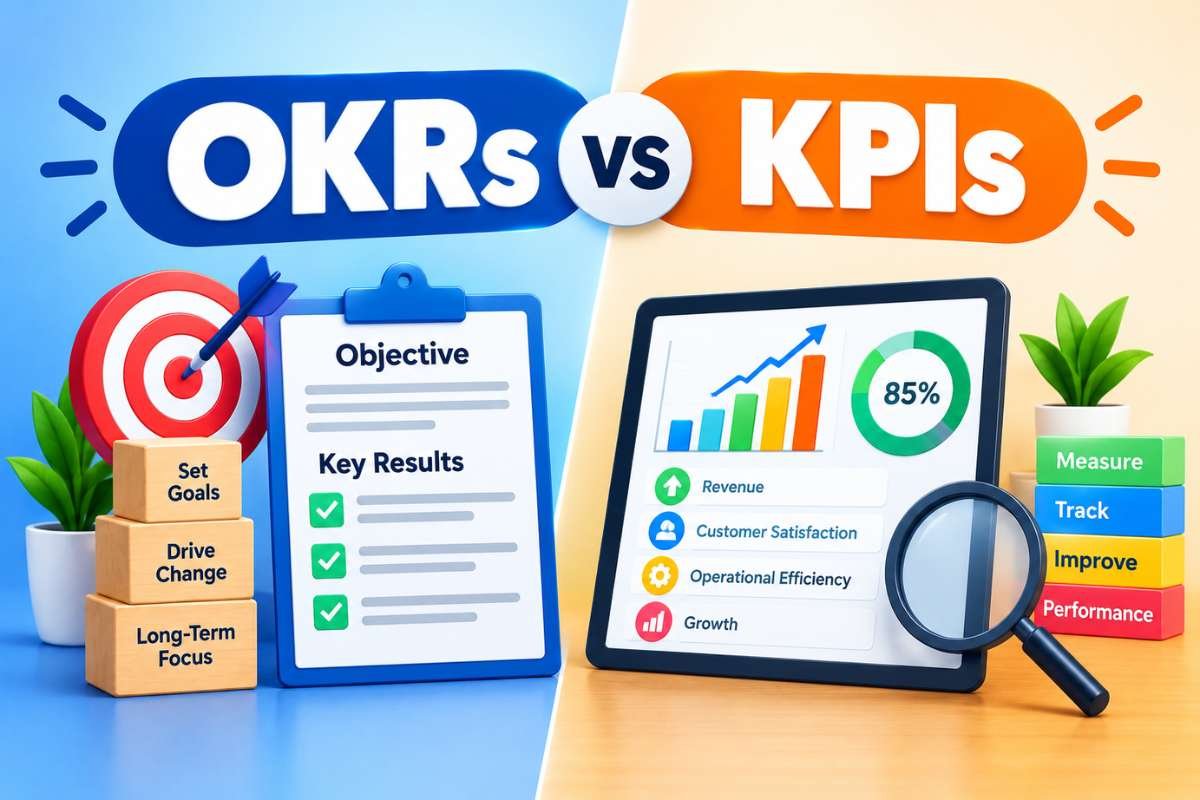
Static plans are dangerous. You must establish a dashboard of KPIs that tie HR outcomes to business performance.
Don’t just track time to hire. Track:
- Performance ratings of new hires at the 6-month mark.
- Percentage increase in output or skill proficiency following training.
- This is the most critical health metric for any organization.
If the data shows a strategy isn’t working, be the first to call it out. Strategic HR requires the courage to kill a failing program quickly and pivot resources to where they generate value.
7. Use technology and AI integration
The final step, and the one that separates 2026 leaders from the pack, is the full integration of HR technology. Per recent industry reports, over 70% of high-growth companies are now using AI to handle routine administrative tasks, allowing HR teams to focus on strategy.
Don’t use technology just for the sake of it. Use it for:
- Using historical turnover data to flag at-risk employees before they resign.
- Using AI to suggest customized learning paths for employees increases engagement.
- Automating the first two stages of the recruitment funnel to reduce administrative overhead by up to 40%.
Conclusion:
The steps of strategic HR management are not a project you finish and check off a list. It is an ongoing cycle of planning, testing, and learning. Start by linking your team’s daily work to your company’s long-term goals.
If you feel stuck, just pick one step from this guide and try it this week. Keep watching your data and talking with your leaders. When you treat your people as your most valuable asset, the results will follow.
FAQs
1. Is strategic HR management only for large corporations?
A: Absolutely not. Small businesses have a massive advantage: agility. A startup can implement the steps of strategic HR management in weeks, whereas a massive corporation might take years. The principles of alignment and forecasting apply regardless of headcount.
2. What is the biggest mistake HR leaders make in 2026?
A: Focusing on technology instead of strategy. Buying an expensive HR software suite won’t solve your problems if your HR strategy isn’t aligned with your business goals. Always define the strategy first; let the technology facilitate it second.
3. How do I prove the ROI of my HR strategy to the CEO?
A: Speak the language of the CFO. Don’t talk about employee happiness or culture in isolation. Talk about retention of key revenue-generating talent, reduction in recruitment costs through internal mobility, and increased output per headcount.