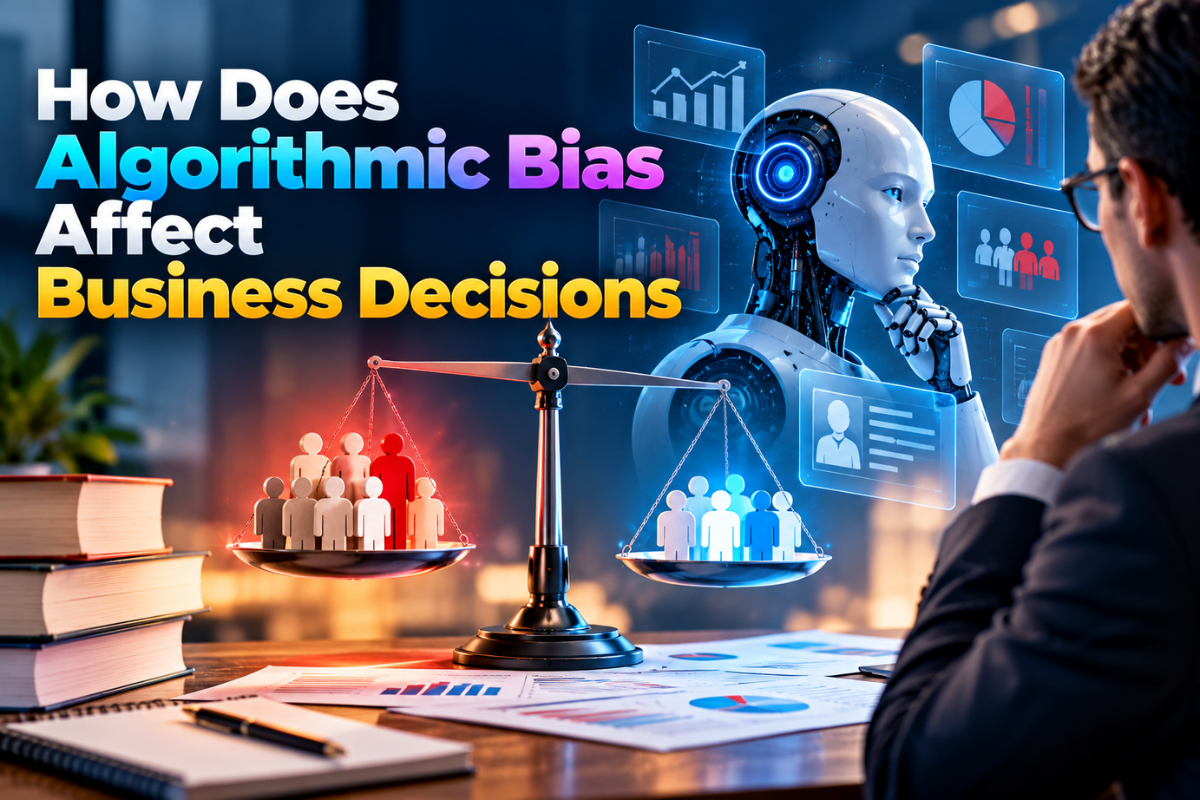
Your hiring software just rejected a great candidate, and nobody noticed. Sound far-fetched? It happens more often than most leaders admit. Companies now let algorithms screen resumes, price products, approve loans, and rank sales leads. These tools work fast, but they also copy the flaws hiding in the data you feed them.
So how does algorithmic bias affect business decisions in real life? This guide shows where bias starts, what it costs, and how your team can catch it early.
What is algorithmic bias, and why does it happen?

Algorithmic bias means a system treats one group worse than another with no fair reason. The code rarely intends harm. The trouble usually starts with the data and the choices behind the model.
Harvard Business School researchers name two common roots. Past human decisions teach the model bad habits, and incomplete data leaves some groups out of the picture. A machine that learns from a biased past will repeat that past at scale.
Three sources show up again and again.
- Historical data: The model learns from old choices that already favored one group.
- Sampling gaps: The training data misses people the system will later judge.
- Design choices: Developers pick goals and features that quietly tilt results.
The risk keeps growing. The Stanford AI Index counted 362 documented AI incidents in 2025, up from 233 in 2024. Not every incident involves bias, yet the direction is clear.
How does algorithmic bias affect business decisions across departments?
Bias does not stay in one corner of the company. It shows up wherever software ranks, scores, or filters people. The table below maps the most common spots.
| Department | Typical algorithm | How bias shows up | Business impact |
|---|---|---|---|
| HR | Resume screening | Favors profiles that match past hires | Narrow talent pool, legal risk |
| Finance | Credit scoring | Scores thin-file applicants too low | Lost customers, fair-lending risk |
| Marketing | Ad targeting | Skips groups the model undercounts | Missed revenue, weaker reach |
| Sales | Lead scoring | Over-ranks familiar buyer profiles | Ignored markets |
| Operations | Demand and pricing models | Misreads under-sampled regions | Stockouts, unfair prices |
Look at the pattern. Each model looks objective, so people trust it. That trust lowers scrutiny, and flawed outputs slide straight into plans and budgets.
Try a simple test on your next team call. Ask, “How does algorithmic bias affect business decisions in our own workflows?” Most teams cannot answer yet. That silence tells you where to start.
What does algorithmic bias cost a company?

Bias costs money in three ways. It drives up legal bills, drains talent, and chips away at customer trust.
A real case makes this concrete. In 2023, the EEOC settled with iTutorGroup for $365,000. The agency said the company’s recruiting software automatically rejected older applicants. Qualified people never got a fair look.
Now think about scale. How does algorithmic bias affect business decisions when software handles thousands of cases a day? It multiplies one flawed rule into thousands of bad outcomes.
Here are the five risks to watch.
- Legal exposure: Discrimination claims can follow automated decisions.
- Lost talent: Strong candidates never reach a human reviewer.
- Weak pricing and lending: Skewed scores shrink revenue and widen risk.
- Brand damage: Customers speak up fast once they spot unfair treatment.
- Distorted strategy: Leaders plan around dashboards that hide gaps.
Why do smart teams miss algorithmic bias?
Automation feels neutral. Managers assume a machine holds no opinions. That belief creates the biggest blind spot in the whole process.
Speed adds pressure. Teams adopt a tool to save time, so few people stop to test it. Vendors often share little about how the model works. Nobody checks results by group, so patterns stay hidden for months.
Regulators and courts now press on this gap. They keep asking the same thing. How does algorithmic bias affect business decisions, and who owns the fix? Your company needs a clear answer before an auditor asks.
Teams that never ask this question usually find the problem late. Late discovery costs far more than early testing.
How can you reduce algorithmic bias in your business?

The good news is real. The same Harvard researchers note that algorithms give you something concrete to measure and fix. Human bias rarely offers that.
Start with one question. How does algorithmic bias affect business decisions in your highest-volume process? Pick that process and audit it first. Small, focused audits beat big promises.
Use this plan as your starting point.
| Step | Action | Owner |
|---|---|---|
| Audit the data | Look for gaps and old patterns | Data team |
| Test outcomes | Compare results across groups | Analytics |
| Keep humans involved | Review every high-stakes call | Managers |
| Question vendors | Ask how they test for bias | Procurement |
| Log changes | Record each model update | Compliance |
Repeat the cycle after every major data or model change. Bias can creep back whenever inputs shift. Treat the audit as a habit, not a one-time project.
Final thoughts
How does algorithmic bias affect business decisions? It scales old mistakes and hides them behind clean dashboards. The fix starts with simple questions, regular audits, and human review on high-stakes calls. Pick one automated process this week. Test its results across groups and share what you find with your leadership team.
FAQs
1. Can small businesses face algorithmic bias risks too?
Yes. Off-the-shelf hiring, ad, and credit tools carry the same flaws, so ask every vendor how they test.
2. Does removing gender or race data stop bias?
Not always. Other fields, such as zip code, can act as stand-ins and bring the same bias back.
3. Who carries legal responsibility when a vendor’s tool discriminates?
Often the business that uses the tool. Review your contracts and talk with legal counsel.
4. What tools help detect bias in machine learning models?
Open-source toolkits such as IBM’s AI Fairness 360 and Fairlearn help teams measure unfair outcomes.
5. How does algorithmic bias affect business decisions in small hiring teams?
It filters out qualified candidates early, so owners never see the talent they lost.