Effective Vendor Management helps you lower risks, save money, and boost results. It is more than just buying supplies; it is about choosing the right partners, tracking their work, and auditing their bills. When you manage your suppliers from start to finish, you protect your data and keep your operations smooth. Follow these steps to build a stronger supply chain and improve your bottom line.
Ever wonder why a single supplier error can ruin your whole week? It often comes down to how you handle your partnerships. Many companies treat these relationships like a one-time transaction. They pay the bill, hope for the best, and move on. That is a risky habit.
Vendor management is simply the process of picking, watching, and caring for the companies that help you run your business. It is not just about procurement or buying supplies. It is about knowing who has access to your data and who supports your daily work. When you manage these assets with care, you turn potential problems into a reliable team.
If you want to build a stable and high-performing supplier list this year, follow the path below.
How do you pick the right partners for vendor management?
Do not choose a partner just because they offer the lowest price. A cheap vendor can become very expensive if they fail to deliver or if they create a security gap. You need to look at more than just the quote on the page.
Use a simple score card to grade each company you consider. Look for these four traits:
- Ability to grow: Can they handle more work if your business doubles next month?
- Financial health: Will they still be in business two years from now?
- Security: Do they protect your data as well as you do?
- Fit: Do their values match yours?
When you put quality first, you avoid the headaches that come with low-end service providers. Treat your selection process like you are hiring a key staff member.
What is the best way to manage the vendor management lifecycle?
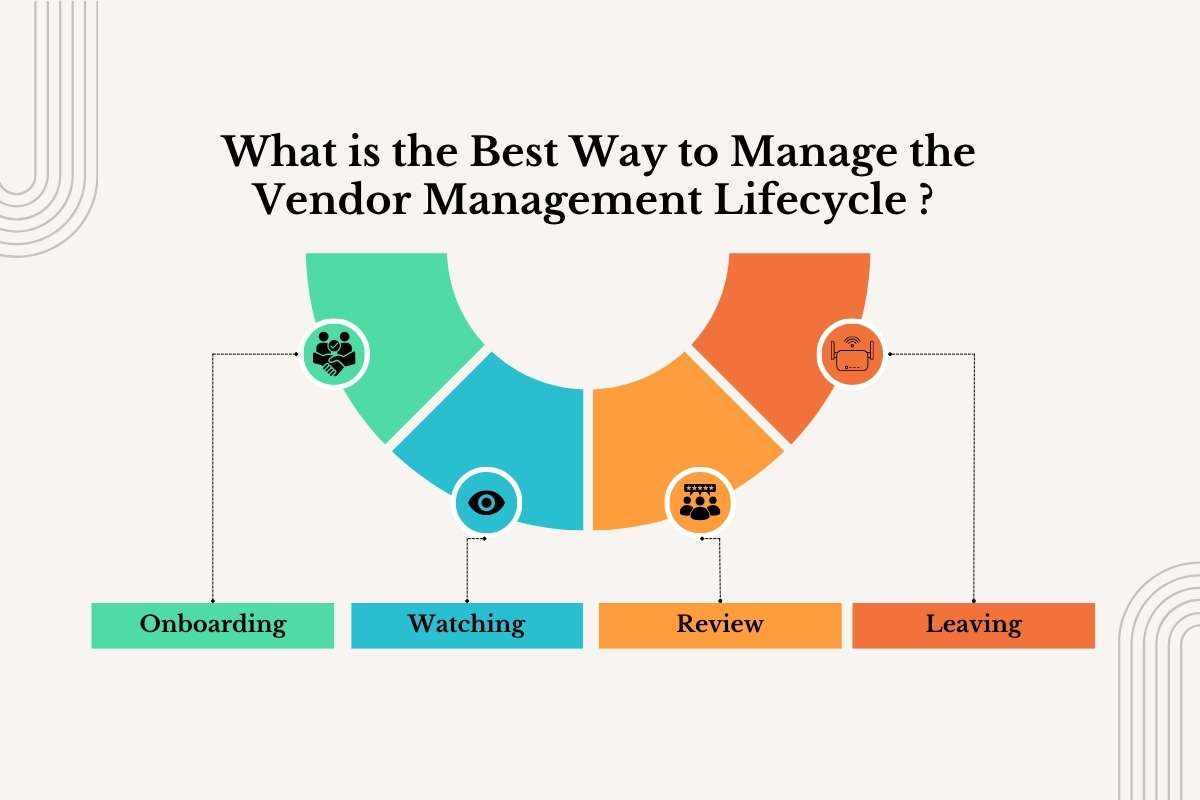
Think of every supplier relationship as an event with a clear start, middle, and end. Most businesses fail in the end. They leave access to their systems open long after the contract is done.
Follow this checklist to keep things tight:
- Onboarding: Check the vendor out before you sign. Lock in your rules early.
- Watching: Do not assume a partner stays safe forever. Check their status every few months.
- Review: Set clear goals. If they miss the mark, create a plan to fix it.
- Leaving: Remove their access to your network the moment the contract ends.
Treat every relationship as an asset that needs your time. When you stop watching a vendor, you open a door for attackers.
READ MORE:
The Ultimate Guide to Cost Cutting Strategies in Business
How Enterprise Workflow Automation Dominates Businesses in 2026
How does vendor management keep your company safe from third-party risks?
This is where the stakes get high. Data from the 2025 IBM Cost of a Data Breach Report shows that 30% of breaches now involve third parties, with those incidents often taking significantly longer to detect than internal ones. You are only as secure as your weakest link.
Research from the Verizon 2025 Data Breach Investigations Report (DBIR) shows that external actors are responsible for the majority of these incidents, often targeting partners to gain entry into larger, more secure networks. This means you must know exactly what access your suppliers have.
| Risk Area | Why does it matter? | How to fix it? |
| Cybersecurity | Data breaches | Check their security every quarter |
| Money | Supply chain failure | Review their financial reports |
| Work | Service downtime | Have a backup supplier ready |
| Rules | Legal fines | Verify their compliance papers |
How do you prove the value of vendor management?

How do you show your boss that this work pays off? Speak their language. Skip the talk about better relationships and focus on the money you saved.
When you show clear results, it is easy to justify your time. Focus on these three areas:
- Catch Billing Errors: Audit invoices to find duplicate charges. You will often recover thousands of dollars in overpayments.
- Stop Maverick Spending: Prevent your team from buying outside of approved contracts. This locks in your volume discounts.
- Block Security Risks: Stop vendors with expired security papers before they access your network. This prevents costly data breaches.
IBM reports that supply-chain attacks take 267 days to find on average. If you spot these issues in weeks instead of months, you save the company from huge losses. When you share these numbers, you stop being a cost center and start being a business partner.
Conclusion:
Strong vendor management is not a task you finish in a day. It is a steady cycle of checking, watching, and fixing. If you follow these steps, you will protect your business and make your supply chain a real strength.
Start by making a list of every company that has access to your computer systems. Once you see the full list, you will know exactly where to start your security checks.
FAQs
1. Is vendor management only for big companies?
A: Not at all. Small businesses face high risks because they often lack a dedicated team. Making a list of who has access to your systems is a great first step for any-sized business.
2. What is the most common mistake in 2026?
A: Forgetting to close the door when a contract ends. Research shows that 25% of former workers or partners often keep access to old accounts. Always remove their access immediately.
3. How often should I check on my top suppliers?
A: Check on your most important partners at least once every three months. Use this time to confirm their insurance is active and their security is still up to par.