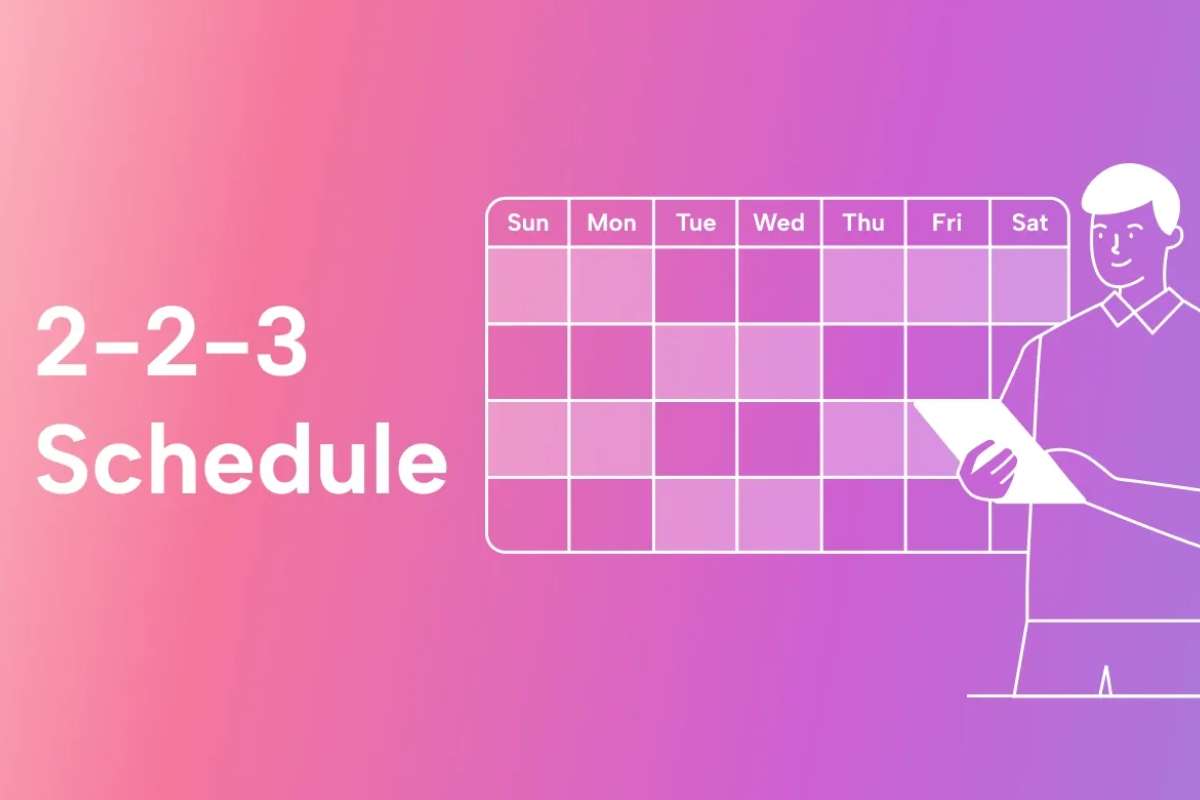
Many people feel worn out by the usual five-day workweek that leaves little room for family or rest. Long stretches of work often push personal life to the edges, especially in roles that demand constant attention. A 2-2-3 schedule changes that rhythm by spacing workdays and rest days more evenly. Instead of waiting an entire week for time off, employees get breaks more often and sooner.
Under a 2-2-3 schedule, teams follow a repeating pattern of two days of work, two days off, and then three days of work. This structure runs across two weeks and then resets. The result is a steady cycle that gives workers recovery time without reducing overall coverage. It also avoids the mental drag that builds up during long work streaks.
This setup works exceptionally well for roles that operate around the clock, such as hospitals, factories, utilities, and support centers. Workers get every other weekend off and several three-day breaks each month. In 2026, with a stronger focus on employee health backed by labor research, the 2-2-3 Schedule continues to gain support among managers who want reliable staffing without pushing overtime too far.
In this article, we explain how the 2-2-3 schedule works, where it fits best, its advantages and drawbacks, and how teams can apply it smoothly.
What Is a 2-2-3 Schedule?
The 2-2-3 Schedule is a rotating shift system that divides employees into four teams. These teams rotate through twelve-hour shifts over a fourteen-day cycle. Each team works two days, rests two days, works three days, then flips the pattern in the second week.
Most organizations use fixed shift lengths to maintain consistent coverage. Day shifts often run from early morning to early evening, while night shifts cover the remaining hours. Because teams rotate in a planned order, operations stay active without gaps.
Across a whole month, employees usually work about fourteen shifts. While the days are longer, the total number of workdays is lower than a traditional eight-hour schedule. This tradeoff appeals to both workers and employers when managed correctly.
How the 2-2-3 Schedule Works Week by Week
The Schedule operates on a two-week rotation. During the first week, two teams handle day shifts and two handle night shifts. Each team follows the same two-on, two-off, three-on pattern.
In the second week, the pattern reverses. Teams that worked at the start of the first week begin with days off. This flip ensures that everyone receives equal rest time and weekend access.
Over the whole cycle, each employee works the same number of hours. The structure also helps managers plan staffing well in advance, since the rotation remains fixed unless adjusted.
Why Twelve-Hour Shifts Are Common
Many companies pair the 2-2-3 Schedule with twelve-hour shifts because it simplifies coverage. Fewer handovers mean less miscommunication and fewer transition errors.
Longer shifts also reduce the total number of days employees need to commute. For workers with long travel times, this can be a significant benefit.
That said, organizations must support employees with proper breaks, clear task limits, and fatigue-management practices to maintain steady performance throughout long shifts.
READ MORE:
Roles and Industries That Use This Schedule
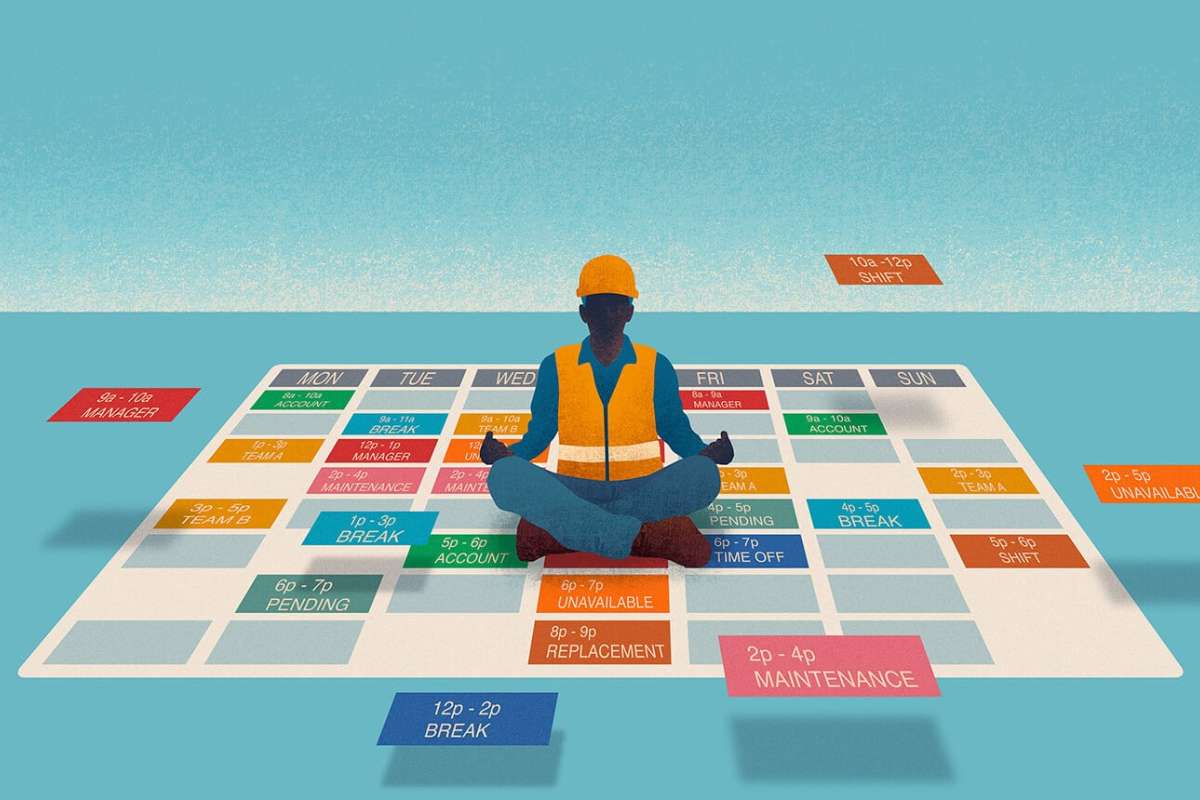
Healthcare facilities rely on this Schedule to maintain patient care without exhausting staff. Emergency departments, intensive care units, and labs often adopt it.
Manufacturing plants use it to keep machines running nonstop. Power generation, water treatment, and logistics hubs also benefit from continuous staffing.
Currently, more customer support teams and monitoring roles will use the 2-2-3 Schedule to meet global demand across time zones.
Benefits for Employees
Frequent days off are the most noticeable benefit. Workers do not need to wait long to recover, which helps mental clarity and physical energy.
Every other weekend, free to allow for family time and personal planning. Many employees report improved sleep patterns after adjusting to the rotation.
The predictable cycle makes it easier to plan appointments, study schedules, or personal projects without last-minute changes.
Benefits for Employers
From an operational view, the Schedule ensures steady coverage every day of the week. This reduces the need for emergency staffing or costly last-minute overtime.
Employee retention often improves. When workers feel rested and treated fairly, they are more likely to stay. Training and hiring costs drop as a result.
Managers also gain better visibility into staffing needs because the rotation stays consistent.
Challenges to Watch Closely
Twelve-hour shifts can be tiring, especially during night rotations. Without proper rest support, fatigue may affect focus.
Some employees struggle with weekend work, even when it rotates. Clear expectations help reduce frustration.
Labor rules vary by region, and some areas require employee consent for long shifts. Compliance checks are essential in 2026.
Variations of the 2-2-3 Schedule

Several alternatives build on the core structure. The Pitman schedule keeps workers on fixed day or night shifts to reduce sleep disruption.
The DuPont schedule runs over a longer cycle and includes a whole week off, which some workers prefer.
Smaller teams may use three-team rotations with shorter cycles, though these offer less recovery time.
How to Introduce the Schedule Successfully
Start by explaining how the system works and why it is being considered. Transparency builds trust.
Gather feedback before launch. Some teams may prefer fixed shifts or adjusted start times.
Use scheduling software to reduce manual errors and handle swaps. Transparent handover processes help maintain quality.
Tools That Support the Schedule in 2026
Modern workforce tools simplify rotation planning, time tracking, and compliance. Many platforms offer mobile access so employees can check schedules easily.
These systems also flag overtime risks and help balance workloads. Integration with payroll reduces administrative effort.
As of 2026, most companies using rotating shifts rely on cloud-based scheduling tools to stay organized.
Measuring Success After Implementation
Track key metrics, including absenteeism, turnover, and error rates. Compare them with data from previous schedules.
Regular check-ins with employees help identify fatigue or morale issues early.
Adjustments based on honest feedback keep the system effective over time.
Who Should Avoid the 2-2-3 Schedule?
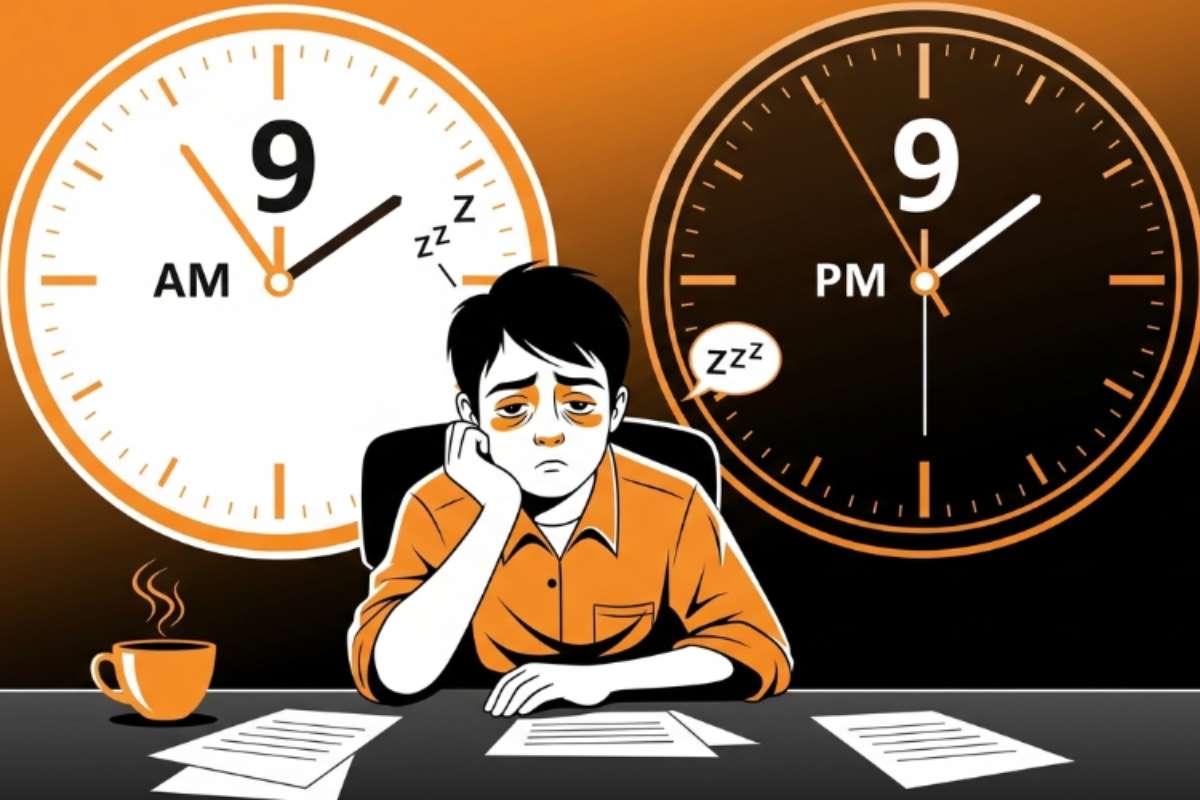
Not every workplace benefits from this structure. Offices with fixed daytime operations may find it unnecessary.
Roles that demand short daily focus rather than extended coverage may struggle with twelve-hour shifts.
Careful role analysis helps determine whether the Schedule aligns with operational goals.
Making the Schedule Work Long Term
Long-term success depends on flexibility and support. Wellness programs, rest education, and fair rotation policies matter.
Managers should review the system regularly and stay open to tweaks as needs change.
When appropriately supported, the 2-2-3 Schedule can deliver stability for businesses and balance for employees in the years ahead.
Conclusion
The 2-2-3 Schedule offers a practical way to balance nonstop operations with human limits. Spreading work across shorter cycles and adding regular rest days helps reduce fatigue while maintaining coverage. For employees, the value lies in predictable time off, fair weekend rotation, and fewer long stretches without breaks. For employers, it brings structure, lower absenteeism, and smoother staffing across all days.
That said, success depends on how well the Schedule is managed. Long shifts require strong fatigue controls, clear handovers, and compliance with labor rules that continue to evolve in 2026. When teams are consulted early and supported with the right tools, the system becomes easier to sustain.
For organizations that operate around the clock, the 2-2-3 Schedule remains a strong option. With regular review and minor adjustments based on feedback, it can support both performance and well-being over the long term.