In today’s competitive and fast-changing business environment, success is rarely accidental. Organisations that grow consistently are those that plan with intention and execute with clarity. At the heart of this planning lies a clear understanding of Short Term and Long Term Business Goals, which together create a structured roadmap for performance and future expansion. When businesses align immediate priorities with long-range vision, they build resilience, focus, and measurable progress.
This article explores how short-term and long-term goals differ, why both are essential, and how companies can strategically balance them to achieve sustainable success.
Understanding Business Goals: The Foundation of Growth
Business goals define what an organisation wants to achieve and within what timeframe. They guide decision-making, align teams, and provide benchmarks to measure success. While some goals focus on near-term outcomes, others look far ahead, shaping the company’s long-term direction.
The key to effective planning lies in recognising that Short Term and Long Term Business Goals are not independent. Instead, they work best when designed as interconnected layers of the same strategy where short-term actions actively support long-term ambitions.
What Are Short-Term Business Goals?

Short-term business goals are objectives that a company plans to accomplish in the near future, typically within a few weeks to a year. These goals are highly specific, actionable, and measurable, serving as the building blocks for larger strategic outcomes. tability.io
Think of short-term goals as the immediate checkpoints that keep a business agile and responsive. They often focus on increasing productivity, improving processes, or addressing short-lived opportunities. For example:
- Increasing blog traffic by 25% in the next three months through SEO optimisation
- Redesigning a website homepage within two months to boost user engagement
- Improving email open rates by 10% over the next quarter with A/B testing
These kinds of short-term initiatives help organisations gather momentum, maintain focus, and ensure that day-to-day operations align with broader objectives.
What Are Long-Term Business Goals?

In contrast, long-term business goals span over a longer horizon, usually years,s and represent the ambitious milestones that shape a company’s future. They define where the business wants to be in the long run and often reflect its vision, mission, and core values.
Long-term goals are more strategic and flexible, allowing organisations to adapt to market changes and unforeseen challenges. Examples include:
- Establishing the company as a thought leader in its industry over two years
- Achieving top-tier customer satisfaction scores across all touchpoints
- Transitioning to a microservices architecture to improve long-term scalability
- Expanding into new markets and regions
These goals influence major decisions around investment, innovation, branding, and organisational culture. While they take longer to accomplish, they provide direction, inspire teams, and unify efforts across departments.
Short-Term vs. Long-Term: Key Differences
Understanding the differences between short term and long term business goals helps organisations allocate resources wisely and maintain balance. Here are the core distinctions:
Time Horizon
- Short-Term Goals: Typically achieved in weeks to months, focusing on immediate needs.
- Long-Term Goals: Span months to years, providing strategic vision and future direction.
Purpose
- Short-Term: Tactical and action-driven, addressing current performance or operational gaps.
- Long-Term: Strategic and visionary, guiding overarching growth and organisational evolution.
Flexibility
- Short-Term: More specific and less adaptable once set, due to tight deadlines.
- Long-Term: More flexible, with room for adjustments as conditions change.
In essence, short-term goals are the building blocks that propel the business forward step by step, while long-term goals are the guiding stars that define the company’s ultimate destination.
The Power of Alignment: How Short-Term and Long-Term Goals Work Together
One of the biggest mistakes businesses make is treating short-term and long-term goals as separate or even competing priorities. In high-performing organisations, these goals are tightly interlinked.
Imagine long-term business goals as a mountain peak you want to reach. Each short-term goal is a basecamp that brings you closer to the summit. Without those basecamps, the climb would be too steep and unstructured. Similarly, without a clear summit to aim for, basecamps lose meaning and direction.
Here’s how alignment works in practice:
- A long-term goal to increase overall sales revenue may be broken into short-term goals like securing $30,000 in new deals this quarter or generating 50% of sales from target clients by a set date.
- A long-term goal to improve customer satisfaction could be supported by short-term goals like reducing first reply time by 5% within the next month or improving first-contact resolution by 10% in the next quarter.
When short-term actions feed directly into long-term ambitions, businesses enjoy clarity, motivation, and measurable progress. This alignment also ensures that short-term wins contribute meaningfully toward future success.
Crafting Effective Business Goals: SMART and OKR Frameworks
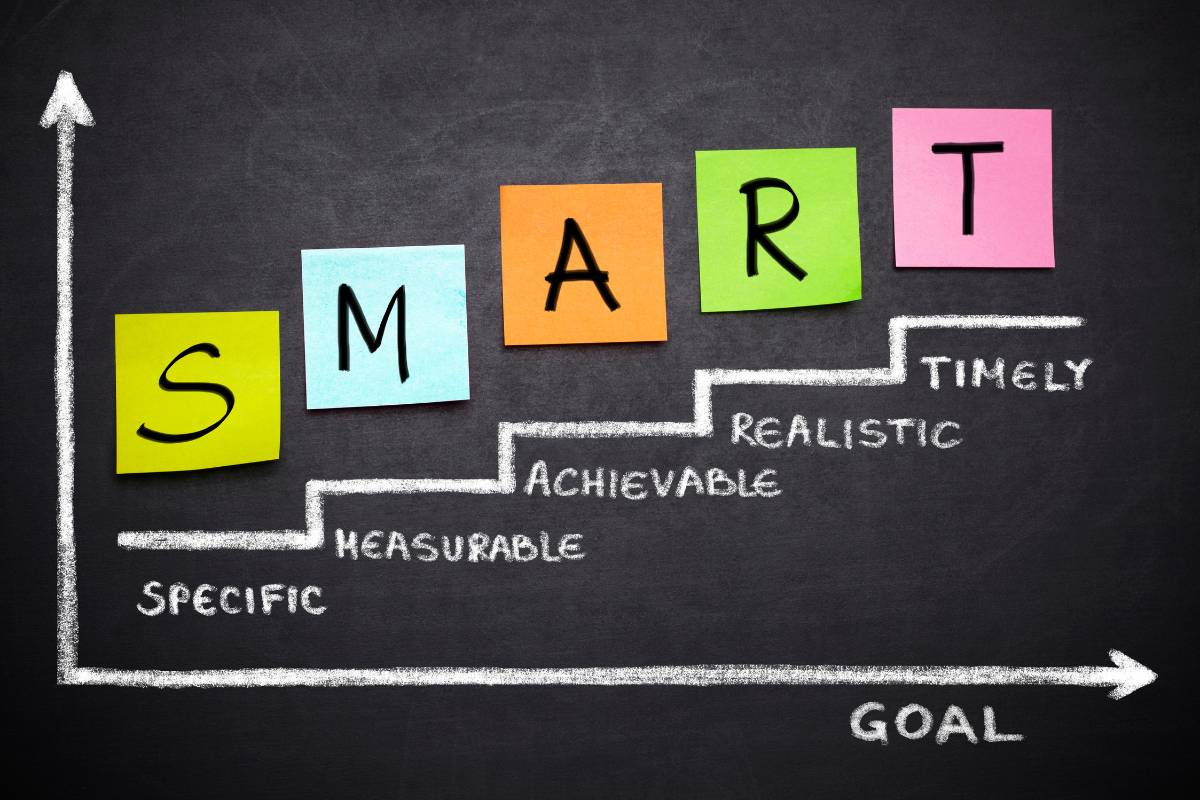
To make Short Term and Long Term Business Goals effective, structure matters. Two widely adopted frameworks help organisations translate ideas into actionable plans.
SMART stands for:
- SPECIFIC
- MEASURABLE
- ACHIEVABLE
- TIME-BOUND
Using this method for both Short Term and Long Term Business Goals ensures that every target is well-defined and actionable. For example, instead of saying “increase traffic,” a SMART goal would be “increase organic blog traffic by 20% over the next 90 days.”
OKRs (Objectives and Key Results)
OKRs break down goals into two core parts:
- Objective: A high-level, inspirational goal
- Key Results: Quantitative outcomes that measure progress
For example:
Objective: Improve overall customer experience
Key Results:
- Increase NPS score from 25 to 45
- Reduce average response time from 2 hours to 30 minutes.
- Achieve a global CSAT score of 90%
This structure helps teams stay focused on outcomes rather than tasks, creating alignment across departments.
Tracking and Reviewing Progress
Setting goals is just the beginning; tracking progress is where execution meets accountability. Effective tracking helps businesses:
- Stay motivated with clear performance data.
- Identify roadblocks early and pivot when necessary.
- Celebrate short-term wins that fuel long-term momentum.
Tools such as dashboards and specialised goal-tracking platforms can turn goal management from a manual chore into a dynamic, real-time process that empowers teams to make smarter decisions.
Final Thoughts: Why Both Goal Types Matter
Short term and long term business goals may differ in timeline, scope, and flexibility, but they are equally important for sustainable success. Short-term goals keep your company agile, productive, and responsive to immediate needs. Long-term goals anchor your organisation to a strategic vision, ensuring that today’s efforts build toward tomorrow’s success.
By aligning both types of goals through proven frameworks like SMART and OKRs, your business can drive measurable progress, foster accountability, and maintain a clear pathway from where you are now to where you want to be.