
Communication is like a flow. It decides if an office runs smoothly or stays confused. In every business, leaders need information to move clearly so they can guide their teams.
The communication process connects your decisions to your results. When a message does not move well from the sender to the receiver, even great plans can fail. Most problems at work start with a message that is hard to understand.
Learning how this process works helps you share ideas better and work better as a team. This article explains the steps, the tools you can use, and how to fix common problems.
What is the Communication Process?
Communication is how people share ideas and facts. It helps teams work together and reach the same goals.
At its heart, it is about making sure the other person truly understands what you mean. This process follows a few simple steps. A sender shares a message through a channel, and then there is a feedback system.
Companies need this structure to keep things clear. Without a set way to talk, people get confused about who is doing what.
The Core Purpose of Communication in Organizations

Communication supports many important functions in an organization. It helps teams stay informed, make decisions, build trust, and stay aligned with goals.
1) Information Sharing
- Every decision starts with the right information. Teams need clear and accurate data to plan their work. Managers share expectations so tasks stay consistent across teams.
2) Decision Support
- Leaders depend on timely updates from their teams. Clear communication channels help them understand the full situation before making decisions.
3) Relationship Building
- Communication helps teams work well together. Trust grows when people share information openly and keep others informed.
4) Performance Alignment
- Clear messages reduce confusion. Teams understand their roles, deadlines, and expected results, which helps work move smoothly.
Key Outcomes of a Strong Communication Process
Organizations that implement structured communication systems achieve:
| Outcome | Impact on Organization |
| Faster Decisions | Reduced delays across workflows |
| Fewer Errors | Clearer instructions minimize mistakes |
| Stronger Collaboration | Teams coordinate tasks efficiently |
| Improved Morale | Employees feel informed and confident |
| Higher Productivity | Work moves without repeated clarification |
These outcomes show why communication remains a central leadership responsibility.
Elements of the Communication Process Explained Step by Step
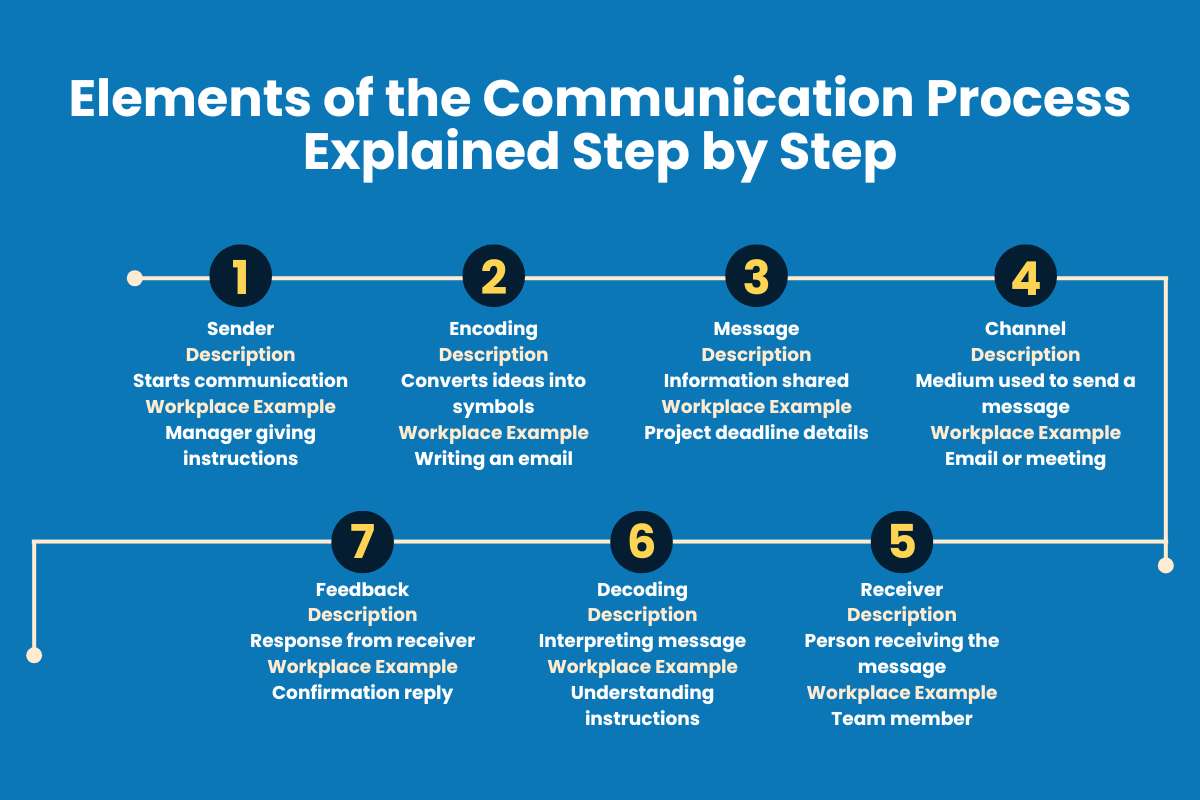
Every communication interaction follows a predictable pattern. Understanding each element helps professionals identify where breakdowns occur.
The core elements include sender, encoding, message, channel, decoding, receiver, and feedback.
| Element | Description | Workplace Example |
| Sender | Starts communication | Manager giving instructions |
| Encoding | Converts ideas into symbols | Writing an email |
| Message | Information shared | Project deadline details |
| Channel | Medium used to send a message | Email or meeting |
| Receiver | Person receiving the message | Team member |
| Decoding | Interpreting message | Understanding instructions |
| Feedback | Response from receiver | Confirmation reply |
1. Sender
The sender starts the communication process. This person creates the message and decides what to share.
A sender must first set a clear goal. When the purpose is clear, the message becomes easier to understand. Poor preparation at this stage creates confusion in later steps.
Effective senders focus on:
- Clear thinking before speaking or writing
- Understanding the needs of the audience
- Planning the message in a simple structure
2. Encoding
Encoding means turning thoughts into words, images, or actions. It helps the sender express ideas in a form others can understand.
Good encoding makes messages clear and simple. Poor encoding makes messages hard to follow. Using simple language and clear structure reduces misunderstanding.
Common forms of encoding include:
- Spoken words
- Written text
- Visuals such as charts or images
- Gestures and body language
3. Message
The message is the information the sender wants to share. It may include facts, instructions, requests, or ideas.
A strong message helps the receiver act quickly and correctly. Incomplete messages often lead to delays and repeated questions.
Strong messages include:
- A clear purpose
- Simple and logical structure
- Relevant details only
4. Channel
The channel is the method used to send the message. The right channel helps the receiver understand the message faster.
Different situations need different channels. Choosing the wrong channel often creates confusion.
Common communication channels include:
- Emails
- Meetings
- Phone calls
- Reports
- Messaging platforms
Complex topics work best in meetings or calls. Routine updates usually fit written messages. Formal channels include official meetings and documents, while informal channels include quick chats and casual talks.
5. Receiver
The receiver is the person who gets the message. This person listens, reads, or observes the message.
Understanding depends on the receiver’s knowledge, focus, and experience. Matching the message to the receiver improves clarity.
Senders should consider:
- The receiver’s skill level
- The receiver’s knowledge of the topic
- The receiver’s attention level
Decoding happens when the receiver interprets the message. The receiver tries to understand the sender’s meaning.
READ MORE:
- 7 C’s of Communication That Fix Common Workplace Mistakes
- Leading Through Adversity: How Great Leaders Rise in Tough Times
6. Decoding
Errors during decoding can lead to misunderstanding. Clear messages reduce decoding mistakes.
Common decoding challenges include:
- Language differences
- Cultural differences
- Personal assumptions
7. Feedback
Feedback is the response from the receiver. It shows whether the message was understood correctly.
Without feedback, communication remains incomplete. Strong feedback loops help improve communication and reduce repeated errors.
Feedback may include:
- Asking questions
- Giving confirmation
- Sharing responses or results
Shannon-Weaver Model: The Foundation of Modern Communication Theory
Developed in the late 1940s, the Shannon-Weaver model introduced a structured linear approach to communication. It remains one of the most widely recognized frameworks today.
This is a famous way to look at communication. It teaches us about ‘Noise.’ Noise is anything that gets in the way of a message. It could be a loud room or just having too many emails. To beat noise, you should repeat your most important points.
Core Components of Shannon–Weaver Model
| Component | Description |
| Source | Origin of message |
| Encoder | Converts a message into signals |
| Channel | Medium transmitting signals |
| Noise | Distortion affecting the message |
| Decoder | Converts signals back |
| Receiver | Final recipient |
Noise affects how well communication works. Outside distractions and personal thoughts can reduce message clarity.
Distortion can change the meaning of a message. Repeating key information helps prevent message loss and improves understanding.
Why Models Matter in Organizations?
Communication process models help teams:
- Diagnose communication gaps
- Improve message design
- Reduce misunderstandings
- Strengthen leadership communication
Organizations that adopt structured models reduce operational friction.
Channels of Communication: Choosing the Right Medium
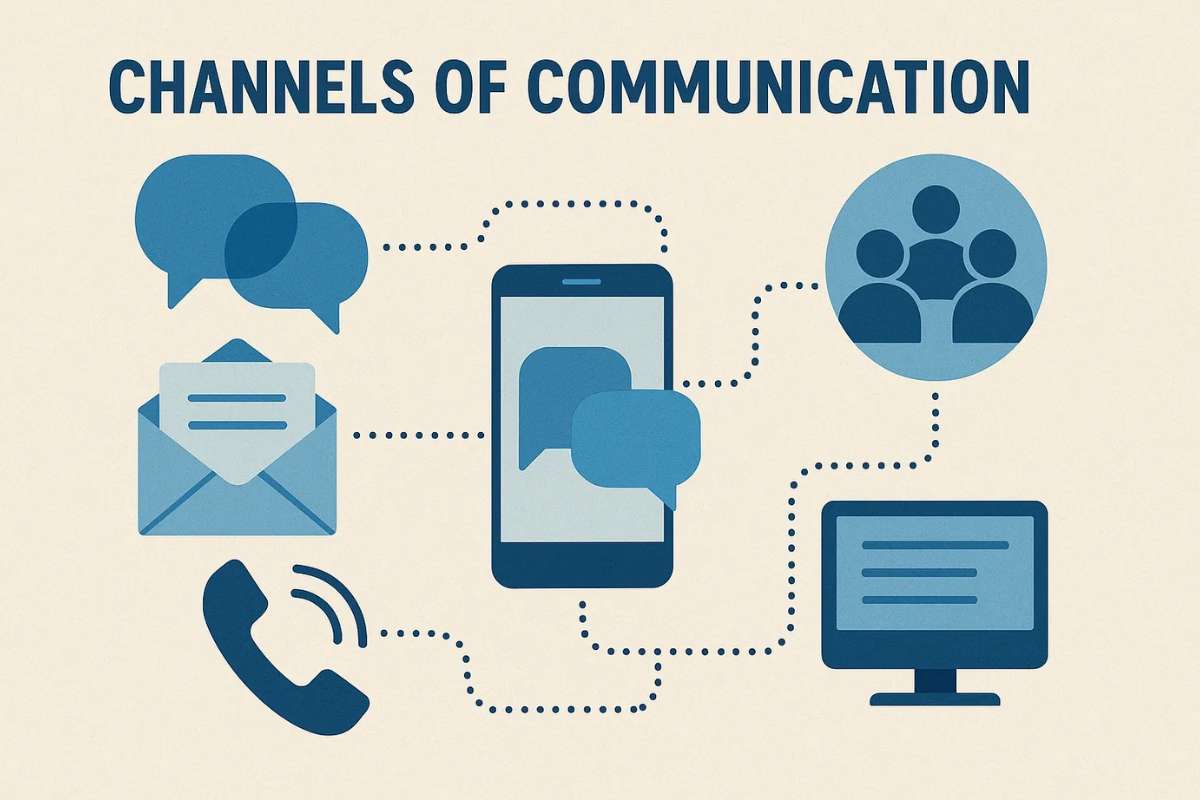
Communication effectiveness depends heavily on selecting the right delivery channel.
Channels influence message interpretation and response speed.
Formal Communication Channels
These follow structured organizational paths.
Examples:
- Meetings
- Reports
- Policies
- Official emails
Formal channels support accountability and documentation.
Informal Communication Channels
Informal channels occur naturally through social interaction.
Examples:
- Casual conversations
- Quick messages
- Team chats
While informal channels increase flexibility, they may introduce inconsistency.
Matching Message Type to Channel
Correct channel selection prevents message distortion. Below is a quick overview for you to understand which channel you should use in different situations.
| Message Type | Recommended Channel |
| Urgent Issue | Phone or meeting |
| Policy Update | Official memo |
| Team Collaboration | Video call |
| Quick Clarification | Messaging platform |
| Performance Review | Face-to-face meeting |
Communication Process Barriers That Disrupt Organizational Flow
Communication barriers are factors that block clear messages. When these barriers appear, people misunderstand information, and work slows down. Knowing these barriers helps leaders keep communication clear and effective.
1) Physical Barriers
Physical barriers come from the environment. They interrupt message delivery and reduce accuracy.
Common examples:
- Loud surroundings
- Poor internet connection
- Background noise during meetings
2) Psychological Barriers
Psychological barriers come from emotions and mindset. These feelings affect how people understand messages.
Common examples:
- Stress
- Personal bias
- Fear or anxiety
3) Language Barriers
Language barriers happen when words are hard to understand. Complex terms or unclear language reduce meaning.
Common examples:
- Use of technical jargon
- Different language levels
- Poor sentence structure
4) Cultural Barriers
Cultural barriers occur when people from different backgrounds interpret messages in different ways.
Common examples:
- Different social norms
- Misunderstood gestures
- Different meanings of words or tone
5) Organizational Barriers
Organizational barriers come from the company structure and workflow. These barriers slow the flow of information.
Common examples:
- Long approval chains
- Too many reporting levels
- Delayed information sharing
How do Feedback Systems Keep Communication Clear and Effective?

Feedback keeps communication clear and complete. Without feedback, mistakes can continue and slow down work.
Positive feedback supports correct actions and builds confidence. It shows people that their work meets expectations. For example, a manager recognizing a completed task helps reinforce good performance.
Constructive feedback helps fix mistakes and improve future work. It focuses on what needs to change and how to improve results. Performance reviews often use constructive feedback to correct gaps that appear during the communication process.
Continuous feedback keeps communication active during daily work. It allows teams to adjust quickly and avoid delays. Daily team check-ins help maintain a steady communication flow.
Regular feedback also supports learning and improves overall communication quality.
Communication Flow in Organizational Structures
Communication flow shows the direction in which messages move within an organization. Clear direction helps teams coordinate better and reduces delays between departments.
- Downward Communication: It moves from leaders to employees. Managers use it to share instructions, policies, and key updates. This flow helps teams understand tasks, rules, and goals so work stays organized.
- Upward Communication: It moves from employees to leaders. Teams use it to send reports, share ideas, and give feedback. This flow helps leaders understand progress, solve problems, and make better decisions.
- Horizontal Communication: Ittakes place between people at the same level. Team members use it to share updates, coordinate tasks, and complete projects together. This flow supports teamwork and keeps daily work moving smoothly.
Modern Communication Process in the Digital Workplace

Technology has changed how communication works in modern organizations. Digital tools help teams share updates quickly and stay connected across remote and hybrid work settings.
Key digital communication tools include email systems, video conferencing tools, collaboration platforms, and project management software. These tools support daily tasks, team coordination, and record keeping across departments.
Digital communication allows faster information sharing and helps maintain clear message records. However, too many messages can create an overload if not managed properly. Leaders must keep communication organized to reduce confusion and maintain clarity.
Why Strong Communication Matters in Business?
When teams follow a clear communication process, they see real improvements in daily work and long-term results.
- Improved Decision Accuracy: Clear communication gives leaders the right facts to make better decisions.
- Stronger Team Collaboration: Shared understanding helps teams coordinate tasks and reach goals faster.
- Increased Organizational Efficiency: Less confusion saves time and keeps work moving across departments.
- Enhanced Stakeholder Trust: Transparent communication builds confidence in the information shared.
Conclusion:
Communication shapes how plans turn into results. Clear messages help teams stay aligned and reduce delays.
Understanding the communication process helps professionals share ideas clearly, choose the right channels, and reduce confusion. Organizations that improve communication create smoother workflows and fewer errors.