Running a business means handling daily pressure while still thinking ahead. Sales targets, hiring needs, customer issues, and new tools all compete for attention. In the middle of this constant activity, many owners struggle with one key question: how to balance short term vs long term business goals without losing focus.
Short-term priorities keep operations moving. Long-term plans give direction and purpose. When one side dominates, problems follow. Too much focus on quick wins leads to burnout and weak foundations. Focusing too much on distant goals can slow progress and hinder cash flow. The real challenge lies in understanding how short term vs long term business goals work together.
By 2026, this balance matters more than ever. Businesses face rapid tech adoption, rising sustainability expectations, and tighter competition. Clear goals help teams stay aligned rather than feeling overwhelmed. In this article, we define short-term and long-term business goals, provide practical examples, and demonstrate how businesses can effectively balance both to foster steady growth.
Short-Term Goals
Short-term goals focus on immediate results. These goals typically span a few weeks to one year and focus on daily operations, performance improvements, and resolving immediate problems. Businesses rely on them to maintain momentum and respond quickly to changes.
These goals stay clear and measurable. For example, a company may aim to increase website traffic by 20 percent within three months through consistent social media posting. Another business might reduce supplier costs by 10 percent in one quarter by reviewing vendor contracts.
In 2026, many short-term goals connect directly to technology and efficiency. A support team may train employees on new AI chat tools within two months to reduce response time. A retail brand might launch a limited promotion to add 50 new customers before the quarter ends.
Short-term goals help teams see progress quickly. Metrics such as sales figures, customer feedback, and conversion rates enable leaders to track results and make adjustments rapidly. When teams hit these targets, confidence grows and sets the stage for bigger goals.
Why Short-Term Goals Matter
Short-term goals keep businesses active and focused. They break large ambitions into manageable steps and prevent teams from feeling stuck.
They also improve accountability. Clear timelines make it easier to measure effort and performance. Leaders can identify problems early and correct them before they grow.
From a financial view, short-term goals protect cash flow. Monthly revenue targets, cost controls, and productivity goals help businesses stay stable during uncertain periods. Within the context of short term vs long term business goals, short-term goals serve as checkpoints to confirm whether the company is moving in the right direction.
Long-Term Goals
Long-term goals define where a business wants to go over several years. These goals often span one to five years or more, focusing on growth, reputation, and long-lasting impact.
Examples include expanding into new cities, building strong brand loyalty, or establishing a leadership position in a specific market. A company may aim to reach 90 percent customer retention by 2030 through better service plans. Another plan is to triple revenue over five years by investing in automation and product innovation.
For 2026 and beyond, long-term goals often include sustainability and the adoption of technology. Businesses may aim for zero-waste operations within three years or long-term cost reduction by integrating AI into core systems.
Long-term goals guide major decisions such as hiring leadership roles, investing in infrastructure, or forming partnerships. They motivate teams by showing them the bigger picture and why their daily work matters.
Why Long-Term Goals Matter

Long-term goals provide direction during uncertainty. Markets shift, customer behavior changes, and new regulations appear. A clear plan helps businesses stay consistent, rather than reacting unthinkingly.
These goals also support smarter investments. Companies that think ahead spend money with purpose rather than in a rush. This reduces wasted effort and improves long-term returns.
From a team perspective, long-term goals create meaning. Employees feel more engaged when they understand how their role contributes to lasting success.
Key Differences
Short term vs long term business goals serve distinct roles. Short ones focus on the present, while long ones look to the years ahead. Purpose sets them apart, too.
| Aspect | Short-Term Goals | Long-Term Goals |
| Timeline | Weeks to 12 months | 1-5 years or more |
| Focus | Quick fixes, daily tasks | Big vision, strategy |
| Flexibility | Great, easy changes | Medium, periodic reviews |
| Examples | Hire 5 staff in 6 months | Double market share in 3 years |
Real Examples Across Business Areas
Examining real-world use cases makes short term vs long term business goals easier to understand.
Marketing

- Short-term goal: Increase email open rates by 15 percent next quarter through subject line testing.
- Long-term goal: Double the subscriber base within eighteen months using lead generation tools.
Sales
- Short-term goal: Close 30 deals this quarter.
- Long-term goal: Increase revenue by 150 percent in three years by entering new markets.
Human Resources
- Short-term goal: Train 80 percent of employees on new systems within six months.
- Long-term goal: Reduce employee turnover to 10 percent within four years through career development plans.
In technology-driven companies, short-term goals often involve upgrading tools quickly and efficiently. Long-term goals focus on building reliable and scalable systems that support future growth and expansion.
How 2026 Trends Affect Business Goals
Business goals continue to evolve as trends change. In 2026, AI, sustainability, and flexible work models influence planning.
AI improves efficiency and forecasting. A short-term goal is to reduce energy usage by 20 percent through the use of intelligent systems. A long-term goal may be to achieve fully optimized, low-impact operations by 2028.
Sustainability expectations grow stronger. A business may switch half of its suppliers to eco-friendly options within one year. Long-term plans may aim for net-zero emissions within five years.
Remote and hybrid work remains common. Short-term goals include improving collaboration tools. Long-term goals involve building global teams and expanding access to talent.
These trends show why short term vs long term business goals must adapt without losing alignment.
How to Balance Short-Term and Long-Term Business Goals
Balancing both types of goals starts with clarity. Businesses should define long-term objectives first, then break them into short-term steps.
Frameworks like SMART goals help keep targets practical. A short-term goal, such as posting three times per week on social platforms, directly supports long-term brand growth.
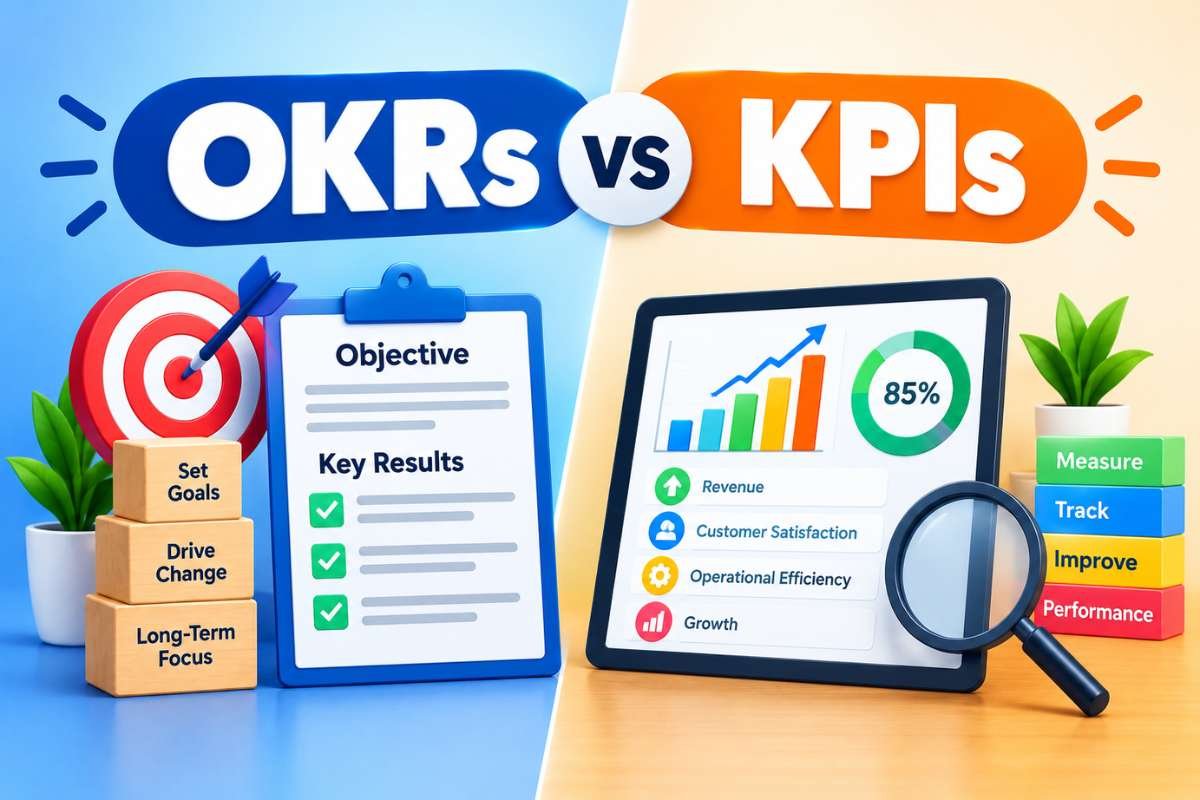
OKRs also help. A broad objective, such as revenue growth, is connected to short-term key results, including quarterly sales increases.
Regular meetings matter. Weekly check-ins help with short-term tasks. Monthly or yearly reviews keep long-term goals relevant. Clear ownership ensures teams stay accountable and motivated.
Tracking Progress Effectively

Tracking keeps goals realistic and visible. Dashboards help teams see progress at a glance.
Short-term goals benefit from weekly tracking of key metrics, including sales, traffic, and customer feedback. In contrast, managingshort term vs long term business goals requires long-term goals to be reviewed of broader indicators, such as revenue trends or retention rates, on a monthly or quarterly basis.
By 2026, many businesses will rely on AI-powered tools to flag risks early. This allows leaders to correct course before problems grow. Feedback from employees also enhances the quality and relevance of goals.
Common Pitfalls to Avoid
Many businesses struggle with balancing short-term and long-term business goals due to a poor balance.
Setting too many short-term goals can distract teams from making meaningful progress. Long-term goals that lack specific numbers or deadlines tend to lose impact.
Ignoring change also causes issues. New regulations, tech shifts, or economic pressure require regular reviews.
Lack of team buy-in weakens execution. Employees perform better when they understand the importance of goals. The solution lies in prioritization, clarity, and communication.
Conclusion
Short-term goals keep businesses active. Long-term goals keep them focused. Success comes from using both together, rather than choosing one over the other.
Companies that understand the difference between short-term and long-term business goals build steady growth, even during uncertainty. With precise planning, regular review, and strong alignment, businesses can move confidently through 2026 and beyond.